When an unexpected illness strikes or a loved one requires care, understanding your leave entitlements under Australian law can help you manage these situations with ease. Both sick leave and carer's leave are designed to ensure that employees can prioritize health and family responsibilities while maintaining job security. So, what's the difference, and how do they work? Let's break it down.
What is Sick Leave?
Sick leave, also referred to as personal leave, allows employees to take paid or unpaid time off when they are unfit for work due to illness or injury.
Key Points About Sick Leave
Sick leave is part of the National Employment Standards (NES) and applies to all employees covered by the Fair Work Act 2009
Full-time and part-time employees are entitled to 10 days of paid personal leave per year (pro-rata for part-time workers)
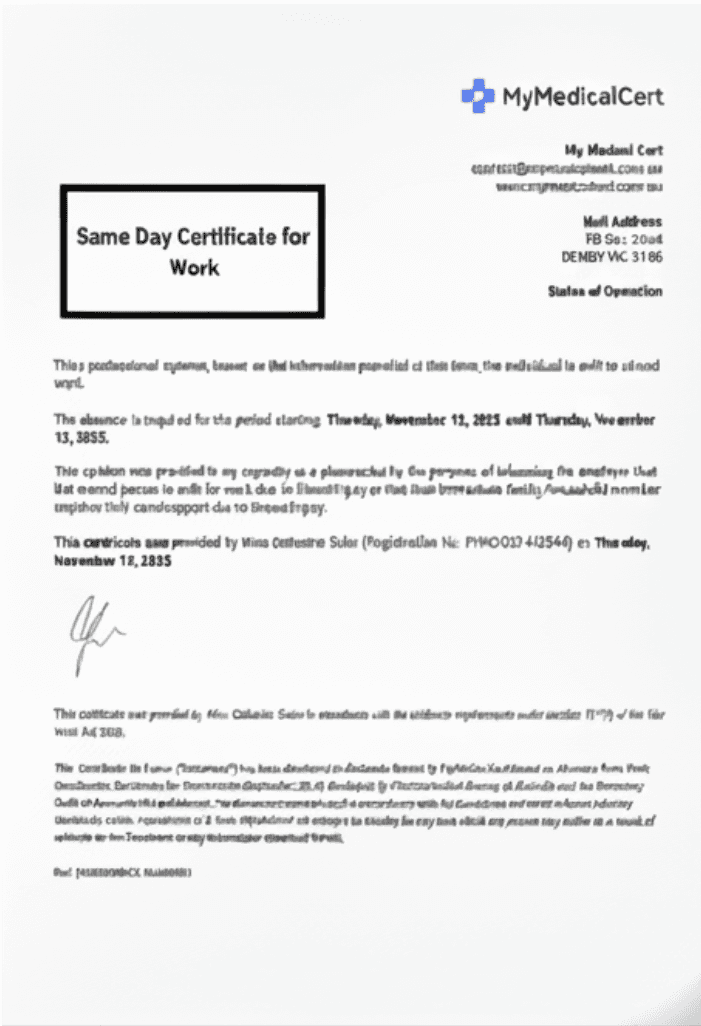
Employers may request evidence—like a medical certificate or a Certificate for Absence from Work—to validate the absence
Sick leave cannot be backdated, meaning it starts from the day of consultation with a healthcare professional
Unused sick leave accumulates and rolls over to the next year
When to Use Sick Leave
Use sick leave when you are unwell or recovering from an injury and cannot safely perform your job. This includes physical illnesses, mental health conditions, and injuries that prevent you from working.
What is Carer's Leave?
Carer's leave enables employees to take time off to care for or support an immediate family or household member who is sick, injured, or facing an unexpected emergency.
Key Points About Carer's Leave
Carer's leave is drawn from the same 10-day annual personal leave entitlement as sick leave
If you have no paid leave remaining, unpaid carer's leave may be available (including for casual employees)
Immediate family members include a spouse, child, parent, grandparent, sibling, or step-relations
Household members are individuals living under the same roof, even if not related
Employers may request evidence verifying the need for care
When to Use Carer's Leave
Carer's leave should be used when a family or household member requires your care due to illness, injury, or emergency. This includes caring for sick children, elderly parents, or partners recovering from medical procedures.
Key Differences Between Sick Leave and Carer's Leave
Aspect | Sick Leave | Carer’s Leave |
|---|---|---|
Purpose | Your own illness or injury | Caring for a family or household member |
Entitlement Source | Same 10-day annual pool | Same 10-day annual pool |
Who It Covers | Employee only | Immediate family or household members |
Evidence Required | Medical certificate for yourself | Certificate stating need to care for another |
Casual Employees | Not entitled to paid leave | Entitled to unpaid carer’s leave |
When Evidence is Required
Employers have the right to request proof that leave is legitimate.
For Sick Leave
A medical certificate issued by a doctor or a pharmacist's Certificate for Absence from Work can serve as evidence. The certificate should confirm you were unable to work due to illness or injury.
For Carer's Leave
A certificate stating the need to care for a family member, including details like the relationship and care requirements, may be required. Services like MyMedicalCert provide pharmacist-approved carer's leave certificates for just $12.99.
Pro Tip: Always check with your employer to confirm which certificates are acceptable under your workplace policy.
How to Obtain a Medical Certificate
Traditional Options
Visit your GP for a consultation and medical certificate
Consult with a pharmacist for minor ailments (certificates for 1-2 days)
Use telehealth services for remote consultations
Online Options
MyMedicalCert offers the fastest and most convenient solution for both sick leave and carer's leave certificates:
Pharmacist-approved certificates delivered within 60 minutes
Available 24/7 from anywhere in Australia
Just $12.99 per certificate with no hidden fees
Valid under the Fair Work Act 2009
Understanding Your Annual Leave Pool
Both sick leave and carer's leave come from the same 10-day annual personal leave entitlement. This means:
If you use 3 days of sick leave, you have 7 days remaining for either sick or carer's leave
The leave pool accumulates each year if unused
Part-time employees receive pro-rata entitlements based on their hours
Casual employees don't accrue paid personal leave but can access unpaid carer's leave
Employee Responsibilities
When taking sick or carer's leave:
Notify your employer as soon as possible
Provide reasonable evidence if requested
Be honest about the reason for your absence
Follow your workplace's notification procedures
Submit certificates or documentation promptly
Employer Responsibilities
Employers must:
Grant leave in accordance with the Fair Work Act 2009
Accept valid medical certificates from registered healthcare professionals
Maintain confidentiality of medical information
Not discriminate against employees for taking lawful leave
Have clear policies regarding notice and evidence requirements
Final Thoughts
Both sick leave and carer's leave provide critical support when health or family emergencies arise. By understanding the nuances between the two, employees can navigate their rights responsibly while ensuring compliance with workplace requirements.
If you're unsure about your situation, consult your employer or HR department. When you need a leave certificate, services like MyMedicalCert make it easy to obtain pharmacist-approved documentation quickly and affordably.